
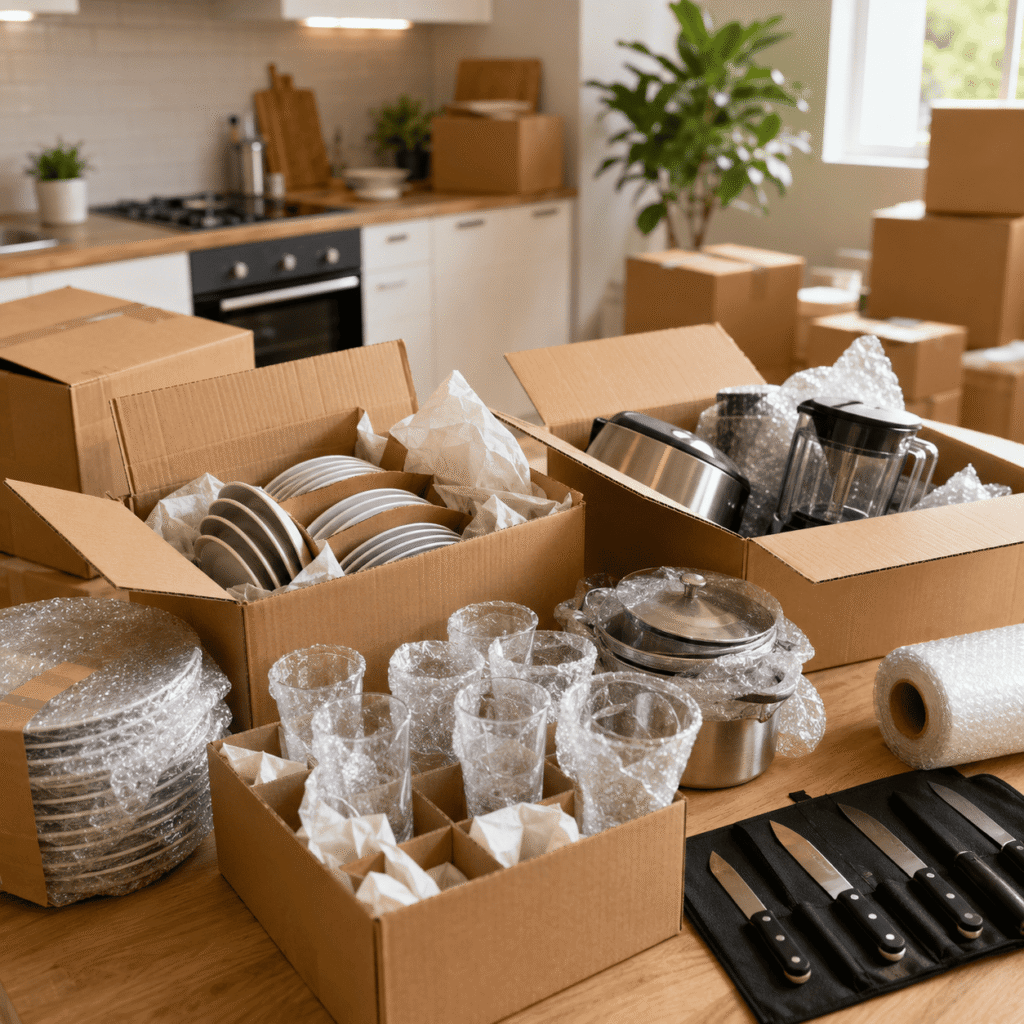
How to pack and move a full kitchen without anything breaking
Introduction
When people prepare for a house move, the kitchen is usually the room they underestimate the most. At first glance, it may seem simple: just plates, appliances, utensils, and groceries. But once packing actually begins, most homeowners quickly realize the kitchen is one of the hardest spaces to move safely.
Unlike bedrooms or living rooms, kitchens combine almost every difficult packing challenge into one room. There are fragile items, sharp objects, heavy cookware, liquids, awkward appliance shapes, glassware, electronics, and breakable ceramics all packed into a relatively small area.
One poorly packed kitchen box can easily result in broken crockery, leaking liquids, damaged appliances, or dangerous accidents during unpacking. This is why professional movers usually spend more time preparing kitchens than almost any other part of the home.
The good news is that kitchen moving becomes much easier when approached systematically. With proper planning, careful packing methods, and the right order of preparation, you can safely relocate your entire kitchen without damage or unnecessary stress.
This guide explains exactly how to pack and move a kitchen properly, what mistakes to avoid, and how to protect everything from delicate glasses to heavy appliances during relocation.
Why the Kitchen Is the Hardest Room to Pack
Most rooms contain items that are fairly predictable to pack. Clothes go into suitcases, books stack neatly in cartons, and furniture is transported separately.
The kitchen is different because it contains:
- Fragile dishes
- Heavy cookware
- Sharp knives
- Open liquids
- Expensive appliances
- Irregularly shaped tools
- Food items with expiration dates
Everything varies in weight, shape, and fragility.
A single kitchen cabinet may contain:
- Ceramic plates
- Wine glasses
- Metal utensils
- Oils and sauces
- Electrical equipment
Each category requires a completely different packing approach.
This is why kitchen packing should never be rushed the night before moving day.
Use Packing Day to Declutter the Kitchen
Moving is the perfect opportunity to reduce unnecessary kitchen clutter.
Most homes contain:
- Expired spices
- Duplicate utensils
- Unused gadgets
- Damaged containers
- Old non-stick pans
- Forgotten pantry items
There is no benefit in paying to transport things you no longer use.
Before packing begins, go cabinet by cabinet and separate:
- Keep
- Donate
- Sell
- Dispose
Decluttering first reduces packing time, lowers moving volume, and makes unpacking at the new home much easier.
Pack in the Right Order
One of the biggest kitchen packing mistakes is boxing daily-use items too early.
Instead, packing should happen in stages.
Start With Rarely Used Items
Begin with:
- Special occasion dishe
- Baking equipment
- Extra serving trays
- Seasonal appliances
- Decorative kitchenware
These items are least likely to disrupt your daily routine before moving day.
Leave Everyday Essentials Until Last
Keep frequently used items available until the final day, including:
- Daily cookware
- Coffee supplies
- Basic plates and cutlery
- Kettle or toaster
- Water bottles
Packing in the right order reduces stress and keeps the kitchen functional during the moving process.
Plates Should Always Be Packed Vertically
One of the most important rules in kitchen packing is how plates are positioned inside boxes.
Many people instinctively stack plates flat on top of each other. Unfortunately, this creates direct pressure that often causes cracks during transport.
Plates should always be packed vertically, similar to vinyl records stored side by side.
Why does this work better?
Vertical positioning distributes pressure more evenly and reduces direct weight compression during movement.
Professional movers use this technique because it dramatically lowers breakage risk.
Each plate should also be wrapped individually before being placed into the box.
Glasses Need Proper Individual Protection
Glassware is one of the easiest kitchen items to damage during relocation.
Loose wrapping is rarely enough protection, especially during long-distance transportation.
Each glass should be:
- Wrapped individually
- Secured tightly
- Protected from movement inside the box
Cell divider boxes are especially useful because they prevent glasses from hitting each other directly during transport.
Wine glasses, delicate cups, and crystal items require extra protection around stems and edges.
Never Pack Knives Loose in a Box
Kitchen knives are one of the most dangerous items to pack incorrectly.
Loose knives can:
- Damage other packed items
- Tear through cartons
- Injure movers or homeowners during unpacking
Knives should always be packed:
- Inside blade sheaths
- In protective sleeves
- Inside knife rolls
If professional covers are unavailable, thick cardboard protection can be used temporarily.
Safety is just as important as preventing breakage during a kitchen move.
Preparing Large Kitchen Appliances Properly
Large kitchen appliances require special preparation before transportation.
This includes:
- Refrigerators
- Washing machines
- Dishwashers
- Dryers
Refrigerators Need Defrosting
Fridges should be emptied and defrosted at least 24 hours before moving day.
This prevents:
- – Water leakage
- – Mold development
- – Internal odor buildup
Shelves and trays should also be secured separately.
Washing Machines Need Drum Protection
Washing machine drums should be stabilized before transport to avoid internal damage.
Professional movers often use transport bolts or protective stabilizing materials.
Appliances Must Stay Upright
Large appliances should always remain upright during transport whenever possible.
Tilting them incorrectly can damage internal systems or cooling mechanisms.
Pack Small Appliances Carefully
Small appliances often contain detachable parts that become damaged or lost easily during moving.
Items like:
- – Mixers
- – Coffee machines
- – Air fryers
- – Food processors
- – Blenders
should have:
- – Cords secured separately
- – Attachments wrapped individually
- – Fragile sections cushioned carefully
If original packaging still exists, it is usually the safest option.
Otherwise, thick padding around edges and corners is important.
Handle Oils and Open Liquids Carefully
Kitchen liquids are one of the biggest moving disasters waiting to happen.
Open oils, sauces, syrups, and condiments can leak easily during transportation.
To reduce risk:
- – Double-bag every bottle
- – Pack liquids upright only
- – Use sealed plastic containers
- – Avoid overfilling boxes
Half-used or low-value items are often not worth transporting at all.
Discarding partially used products usually saves more stress than trying to move them safely.
Prepare an “Open-First” Kitchen Box
After a long moving day, nobody wants to search through ten cartons just to make tea or find plates.
This is why an “open-first” kitchen box is extremely helpful.
This box should contain:
- – Kettle or coffee machine
- – Tea and coffee supplies
- – One frying pan or pot
- – Plates and cutlery for two people
- Dish soap
- Paper towels
- Snacks or instant meals
Pack this box last and label it clearly.
It should stay easily accessible during transport.
Kitchen Boxes Should Never Go Under Heavy Furniture
Heavy kitchen boxes often contain fragile contents despite their weight.
One common mistake during loading is placing heavy furniture on top of kitchen cartons.
Professional movers typically:
- – Stack kitchen boxes securely
- – Keep fragile boxes upright
- – Avoid pressure from furniture
This is especially important for boxes containing ceramics, glasses, or appliances.
Unpack the Kitchen First in the New Home
Many people focus on bedrooms first after moving, but unpacking the kitchen early actually makes the entire home feel functional faster.
A working kitchen provides:
- – Access to meals
- – Coffee and drinks
- – Daily routine stability
- – Reduced stress during unpacking
Even a basic kitchen setup creates a sense of comfort much sooner after relocation.
Start by unpacking:
- – Essential cookware
- – Daily-use dishes
- – Cleaning supplies
- – Appliances used every day
The rest can be organized gradually afterward.
Why Professional Packing Makes a Huge Difference
Kitchen packing requires experience because almost every item category behaves differently during transport.
Professional movers understand:
- – Weight distribution
- – Fragile packing techniques
- – Appliance preparation
- – Safe loading methods
- – Protective wrapping systems
This reduces the chances of:
- – Broken crockery
- – Cracked glassware
- – Appliance damage
- – Leaking liquids
- – Packing injuries
Professionally packed kitchens are usually faster to unpack as well because everything arrives more organized and protected.
Final Thoughts
The kitchen is one of the most challenging parts of any move because it combines fragile, heavy, sharp, and awkwardly shaped items all in one place. Without proper planning, even a short-distance move can result in broken dishes, damaged appliances, and unnecessary stress.
By packing methodically, using proper wrapping techniques, preparing appliances correctly, and organizing boxes strategically, homeowners can significantly reduce damage risks during relocation.
For people who prefer extra peace of mind, professional packing support can make the process much smoother and safer.
At Union Movers, professional packing and moving services are designed to protect every part of your home, including the most delicate kitchen items. From high-quality packing materials to expert handling techniques, their experienced team ensures your crockery, appliances, and kitchen essentials arrive safely and intact. Book a professional packing and moving quote today for a smoother, stress-free relocation experience.


